
Every Choice Matters
 /
About us
/
About us
ABOUT US
Pure Waste is a Finnish clothing company founded in 2013.
We started with a simple idea: waste is a raw material.
The textile industry already produces enormous amounts of usable material. Instead of always starting with virgin fibres, we wanted to see how far we could get by working with materials that already exist.
That question still drives us.
We develop fabrics and garments using recycled textile materials, work with long-term production partners, and keep looking for practical ways to use resources for longer.
We do not believe change comes from slogans. It comes from changing how things are actually made.
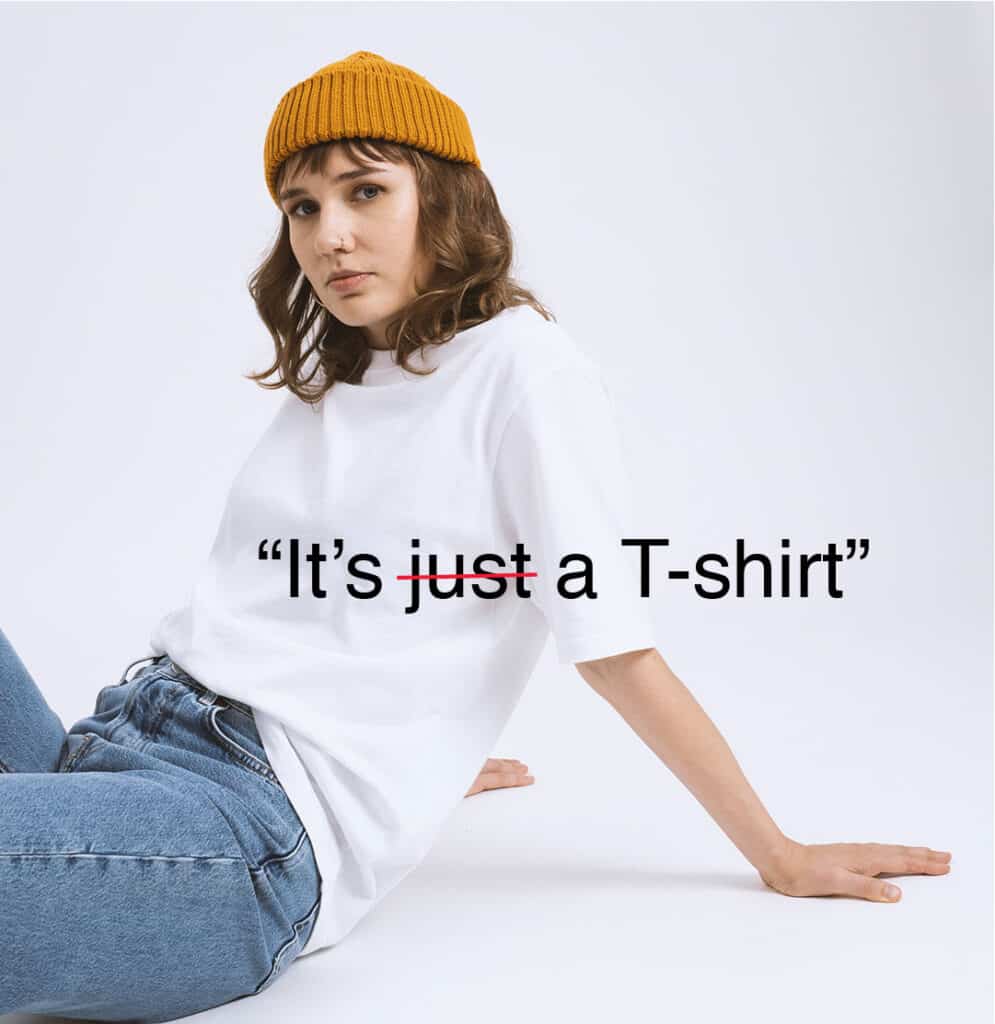
RETHINK
Changing an industry starts with questioning the way things are normally done.
For us, that has meant challenging the assumption that new products always require new raw materials. It also means questioning unnecessary complexity, excess materials and short product lifecycles.
Our collection is intentionally focused. We aim to make straightforward products, use materials carefully and improve the system around them step by step.
There is no finished version of this work.
MATERIALS AND RECYCLING
One of our main raw materials is cotton cutting waste from the garment industry.
This material is created when garments are cut from fabric. The leftover pieces are collected, sorted by quality and colour, and mechanically opened back into fibre.
Our core 60/40 fabric combines:
- 60% mechanically recycled cotton from textile-industry cutting waste
- 40% recycled polyester
The main fabric used in our core products is made from recycled fibres. Other components, such as sewing thread, labels, ribbing or trims, may have a different composition.
You can find the material composition of each product on its product page.
Sorting cotton waste by colour also allows us, where applicable, to work with the colour already present in the material instead of starting from an undyed virgin fibre.
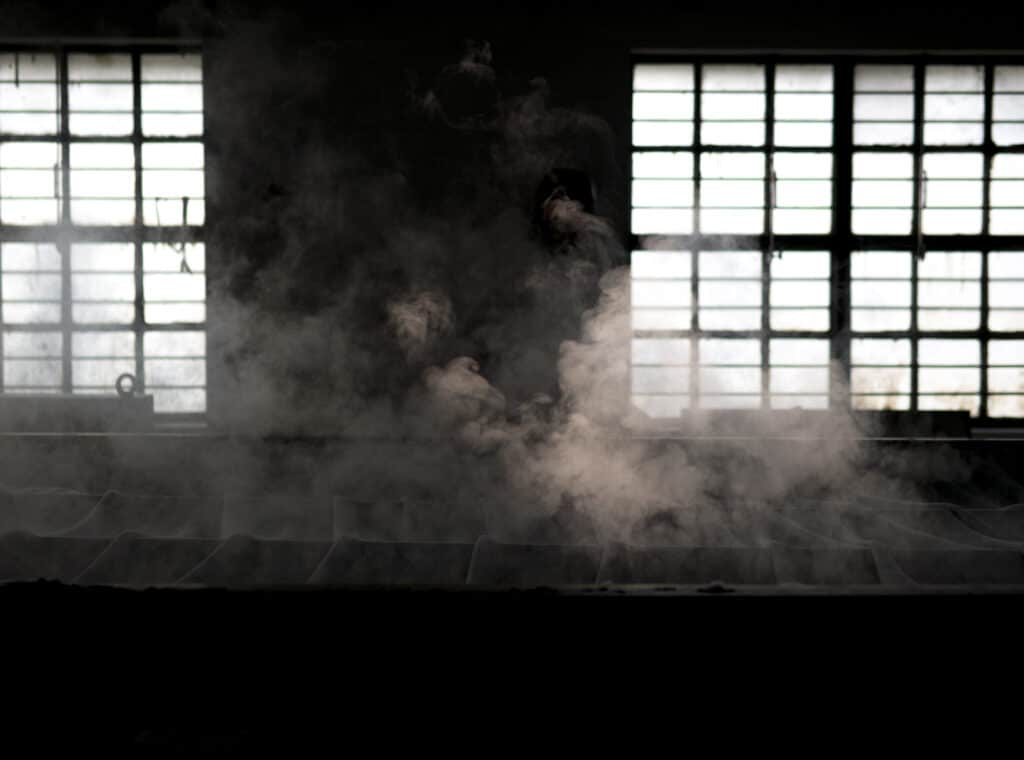
PRODUCTION
Our production network is mainly in India.
The location gives us access to textile expertise, established production infrastructure and the cotton cutting waste used as one of our main raw materials.
We work with long-term partners across yarn production, fabric manufacturing and garment production.
The process moves through several stages:
textile waste → fibre → yarn → fabric → garment
Cotton waste is collected and sorted, mechanically recycled into fibre and combined with recycled polyester. The fibres are spun into yarn, knitted or woven into fabrics, finished and finally made into garments.
We have worked with several of our production partners for many years. Long-term cooperation matters to us because improving materials, quality and traceability takes time.
The numbers — and what they mean
We believe environmental figures are only useful when it is clear what they actually describe.
In 2020, REMO BV calculated the cradle-to-gate environmental impact of a 200 g Pure Waste Crewneck T-shirt made from 60% recycled cotton and 40% recycled polyester.
The study compared the Pure Waste T-shirt with reference T-shirts made from virgin fibres.
Against the reference T-shirt made from 60% virgin cotton and 40% virgin polyester, the calculation reported approximately:
- 50% lower CO₂-equivalent emissions
- more than 99% lower water consumption
for the assessed Pure Waste T-shirt.
The calculation includes the production stages and transportation defined in the REMO study. It does not represent the complete lifetime environmental impact of the garment.
We make the original study available so that the assumptions, comparison and results can be examined rather than taken at face value.
Read the full REMO environmental impact report
IMPACT CALCULATOR
Our Impact Calculator uses the environmental impact results calculated by REMO as its starting point.
The original REMO assessment concerns the Pure Waste Crewneck T-shirt.
Figures shown for other garment types are estimates derived from the REMO results according to product weight. They are not separate product-specific environmental assessments.
KEEP MATERIALS MOVING
Recycling does not stop at using production waste.
We have also worked with post-consumer textiles and tested ways of turning used garments back into textile material. In previous projects, returned Pure Waste garments have been recycled into new fabric and test products.
These projects help us understand what a more circular textile system requires in practice — from product design and material choices to collection, sorting and recycling infrastructure.
Not every experiment becomes a permanent solution. That is part of development.
The point is to keep learning what works.
DESIGN WITHOUT UNNECESSARY NOISE
We want our products to remain straightforward.
That means keeping the collection manageable, avoiding unnecessary components where practical, and considering how materials, construction, care, and eventual recycling fit together.
Product development sometimes creates small quantities of yarns, fabrics or colours that never become part of the permanent collection. Where possible, we use them in limited production instead of leaving usable material unused.
Small decisions matter when they are repeated across thousands of products.
Take care of what already exists
Making a garment requires materials, energy, transportation and work.
Keeping a product in use therefore matters too.
We design products intended for repeated use and provide care instructions to help customers look after them properly.
We do not believe any garment is impact-free. The most useful product is often the one that continues doing its job.
Transparency
Nobody improves by pretending everything is already perfect.
For us, transparency means being specific about what we know, what a claim applies to, and where the information comes from.
A claim about a fabric is not automatically a claim about an entire garment. A calculation for one product is not automatically a calculation for every product. And estimates should be described as estimates.
We continue to improve the information available about our products, materials, production, and supply chain as better data becomes available.
When something changes, the information should change with it.
WHY THE SCARAB?
Our symbol is the scarab beetle.
In ancient Egypt, the scarab represented renewal and rebirth. In nature, dung beetles take something discarded by others and turn it into a resource for something new.
The comparison has always felt appropriate.
Pure Waste started by looking at textile waste and asking a different question:
What if this is not the end of the material, but the beginning?